Showing posts with label Maps & Networking. Show all posts

Wednesday, 13 December 2017

Evaluation

Throughout this entire creative process, there have been many ups and downs and lots of jumping around ideas. Since starting this project on my own, I've definitely seen a significant difference in manageability in my workload since partnering up with Jacob. I feel as though I do my usual problem of trying to overcomplicate my ideas so after having a few meetings with Jacob to discuss how we could approach the idea differently dropped the idea about the senses as we felt it was far to broad and that focusing on the left and right side of the brain is a topic that is a lot more centred and would make more sense to focus on. Myself and Jacob worked well throughout the process by constantly communicating to one another whenever a piece of work was done so we knew we were on the same page. Although our final outcome might not look a lot like how we planned it in our treatment, we are pleased regardless as the process has been the real learning curve. We feel as though we've produced a piece that is engaging, risky and adventurous to make.

The time management has been a bit of a problem for this project, especially as about 2 months of our term have been put solidly into the set building project. To make matters worse, we didn't actually have a solid idea sorted until a week after the set build so we both now know that we will definitely have to manage out time better in future projects. Another con of the project was that we didn't really get to do as much actual filming as we would have liked. Again, this is down to our poor judgement of time management and like before we know that if we want to film more in the future then we will have to be more organised for projects yet to come.

This is our final outcome:


Sunday, 10 December 2017

Inspiration for our shoot


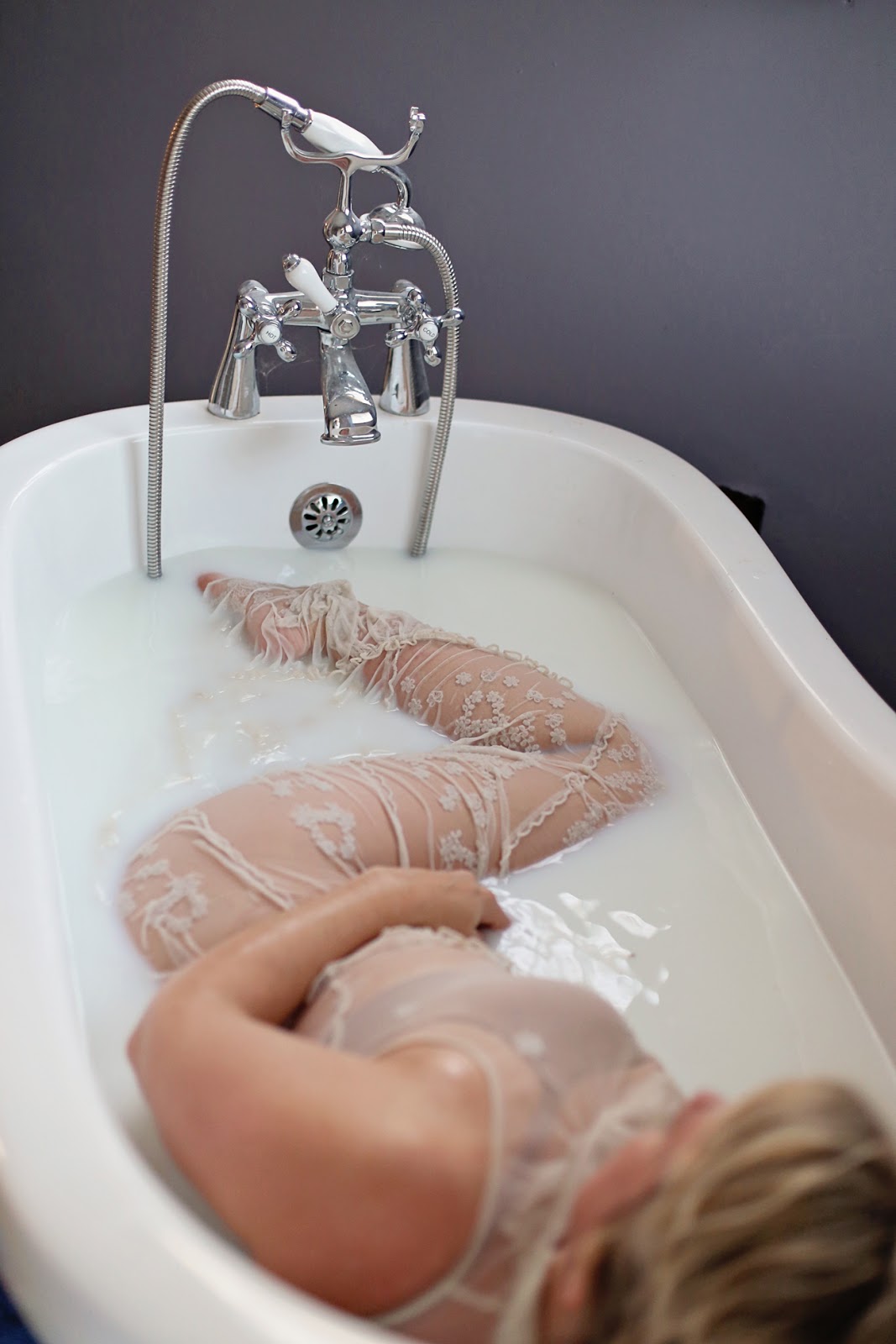
Before shooting, myself and Jacob were looking into artwork and even films that have used baths in them to get an understanding of what sort of framing we'd like to get for our scene with the bath and hoped to get some inspiration. We firstly looked into a photographer called Cindy Johnson who experimented in a shoot using self portraiture in milky bath water. Cindy goes on to discuss her shoot in further detail and goes on to tell about how she was originally supposed to be photographing someone else but at the last minute her model had to pull out. Cindy stated that it didn't phase her as she knew that she was going to do the shoot with or without the model and thus turned the piece into a self portrait series. The thing that drew us most towards Cindy's work is that of her framing. She seems to have created this overwhelming aura about her photographs through the use of where she positions the camera. She favours the use of high angled shots which gives off a lot of vulnerability especially when being sat in a bath tub which is usually a place where people tend to feel a lot of security. We couldn't quite find anything on why she was wearing the clothes that she was but we really like how they are transparent as it really adds to the aesthetic of the shoot.

Cindy Johnson

Cindy Johnson

Cindy Johnson

So Jacob and I didn't look at just one kind of medium, we also looked into different films that have bath scenes and looked at what sort of certain framing created certain moods and feelings. The first film that we looked at was Moonlight and noticed that using a full frame wide shot actually does a really good job of creating the sense of loneliness in a scene as it shows the protagonist in a very isolated and vulnerable light. Of course a lot of this scene is down to the lighting being very minimal which is something we had to think about when filming our own shoot so framing wise this is definitely something we wanted to achieve. Another film that we looked into was Inception. The bath scene(s) in this film are actually a lot more complex and we were completely aware that we wouldn't be able to film on the same sort of scale as they did with this film but we definitely took the scenes as inspiration. The main thing we wanted to take from the Inception was the feeling of submersion which I feel we achieved quite well. 


Moonlight (2016)


Inception (2010)

Tuesday, 7 November 2017

Creative and Technical Skills

In the past, I have had a reasonable amount of experience, especially in framing shots as I started my career in film as a cinematographer. This has helped me massively when moving over to my now preferred role as director as I have a great knowledge of another persons role which is an extremely important role. Our plan is to try and experiment with mediums that we haven't had the chance to use before (projectors).

Equipment wise we are going to be using a Nikon D7200 with a 18-200 3.4 and also an iPhone 7 camera. We also have a 50mm lens which we will bring with us to see if it can improve any shots with the increased depth of field.

My work partner Jacob also has had a history in photography meaning that he too also has a good eye for what shots work well and what shots don't. Jacob also colour corrects his own photos from scratch meaning that he has a talent for post production colour grading too. 

Maps & Networking - Our Shoot

Jacob and I recently filmed how our shoot went by having a friend of our bathe in a bath of pink liquid. Originally the plan was to have our model submerge themselves in paint but after considering the risks and wellbeing of our model we realised that dunking our model in paint would be far too dangerous. We began to brainstorm what we could use in the bath to substitute instead of the paints so I came up with the idea of filling the bath with milk and food colouring. After doing some calculations we realised that it would cost quite a lot of money to fill an entire bath with milk so we decided to go 50/50 with milk and water. To our surprise the liquid in the bath turned out exactly how we wanted; it was safe enough for our model to bathe in but was also thick enough from the milk to look cloudy. Considering we had limited light resources (we only used natural lighting), I think our clips came out quite well. We made sure that our model was comfortable at all times by making sure a warm towel was close the entire time and making sure that the temperature of the water wasn't too cold. We also told him he can shower off and take his time properly bathing after the shoot finished. 


The idea of this shoot was to be very symbolic. By this I mean that the bath is meant to represent the right side of the brain itself and the pink water is supposed to represent the actual creativeness of the brain itself as though to say how when you think creatively we are literally submerged in our thoughts and ideas. This is why we had our model pose in different positions in the bathtub to represent thought processes; the shots where he is sat upright are supposed to show how he in the early stages of thinking creatively whereas there are also shots of him sunk into the pink liquid to show that his thoughts are quite literally swallowing him whole.


Friday, 3 November 2017

Seeing Music in Colours - Melissa McCracken

26 year old Melissa McCracken is a painter with a rare neurological phenomenon called Synesthesia which affects approximately 4% of her home state of Missouri. Melissa's form of her Synesthesia is called Chromesthesia meaning she spontaneously and involuntarily sees colours when she listens to music. Melissa found out about her condition when she was just 16 years old. She tells a story of how she was with her friend and wanted to change her ringtone and how she had a blue phone and she wanted an "orange" ringtone to match because they are complimentary colours. She said that after she'd said that her friend seemed very confused which caught her by surprise. McCracken stated that it was then when she realised that she was different from others.

When asked about how she came to start painting her favourite songs, Melissa stated "Colour seemed like the most natural thing for me to paint because I've always loved it, so I wanted to go down an abstract route. I started painting memories from notable times in my life and thinking of the specific songs that related to them. People seemed interested in my synesthesia so it became my core subject". There are certain music genres that Melissa actually finds prettier than others. For example she finds that funk music is a lot more colourful as it includes lots of different instruments and melodies and rhythms creating a highly saturated effect. 

As an experiment, McCracken met with another person who has synesthesia to listen to the same song and see how their paintings differed from each other. She said that they both painted "Little Wings" by Jimi Hendrix and that both their pieces looked really different, proving how subjective synesthesia is. 

I think that after researching into Melissa's work I now have a much richer understanding of a particular way in which the senses can work with art. Finding her work has really helped influence me to broaden my horizons when looking at the senses side of art. Although I have already done an experiment similar to what Melissa does, I think that possibly trying it again but maybe with an extra party added so we can compare how we perceived the feeling of the same song.

David Bowie, "Life on Mars."

Prince, "Joy in Reception."


Plan For Research

We've begun to think about what things we can research for our projection pieces and what came to mind first was abstract films that portray a particular thought provoking mood. By this we mean films that stimulate intense emotion, allowing us to perceive the film more passionately and be more open minded and free with our interpretations of them. Instantly work by the likes of Stanley Kubrick, David Lynch & even Martin Scorsese came to mind. These are filmmakers who've had a past of visually manipulating their audiences by and keep them on the edge of their seats. Aesthetically, we like the idea of making a piece that looks like 'Eraserhead' (1977) as we like the minute colour and lighting that is used in it but then like the idea of implementing something similar that was used in 'Sin City' (2005) where the film is predominantly black and white but every now and then have intense bursts of colour that we feel would represent the creativity spilling out of us from the dull-set tones of 'rest of the mind'. 

Eraser head (1977)

Shutter Island (2010)

A Clockwork Orange (1971)

Sin City (2005)

Sin City (2005)

Thursday, 2 November 2017

Planning For Our Shoot

Because our project is based around the idea of the left and right side of the brain, we felt it was necessary to research more into the actual ins and outs of the two sides and try to understand which sides produce which individual thoughts, emotions and behaviour. We came across an article on the internet which gave a brief list of things that are typically attributes to each side. We found that the right side of the brain is a lot more creative. It's what's responsible for our imagination, how we respond to music and how we perceive artistic awareness, however, the left side is the opposite to these things. The left side is responsible for your analytic thinking, it's the side that we use when we try to break down puzzles and problems. It's also the side we use for maths, science, logic and language. These are all very helpful traits to know as we can now dissect the brain more in depth and really pick out the genre of clips we will be using in our two different videos. Our plan is to have one side show all of the things and places around use that can stimulate creative thoughts and show a network of thoughts intertwining and linking with one another. On the other side we plan to show how when the left side brain takes charge, we all of a sudden see things in a different way. We start picking away at things strategically instead of diving in head first which is what a lot of people tend to do when thinking creatively. About three quarters of the way through the video we wanted to have the two brains go into 'meltdown mode' and by this we mean that we want to show how the two sides can think very well independently but without each other, the brain cannot cope, it needs both sides to function to its full capability. We plan to do this by turning the videos into what a computer screen would lookalike as if it was rebooting, thus symbolising the brain being unable to cope and trying to start again. This is where we plan to loop the video, making it seem as though the two sides have 'reboot' themselves and everything is now fine again when in reality it just goes back to the beginning, ready for another 'meltdown'.


Wednesday, 1 November 2017

Synopsis

Synopsis

We are going to be experimenting in projection art by producing two different projection installation pieces. The plan is to use two different videos to portray the left and right side of the brain, also known as the creative side and academic side of the brain. We want to show how your brain is almost like a network of thoughts, feelings and ideas and how tiny bits of corruption can destroy or unsettle the brain. The piece would start off with shots of rubix cubes, puzzles and high level maths being completed on the left side and on the other would be things to do with being creative – video games, films, painting, mixed art, filled with colourful, eye catching clips. After a minute of this, the screen would start to glitch, showing the same clips over and over again until the screen freezes and everything would stop and start to change colour/ come up with warning signs… until it turns off. Then resets itself. We want it to represent the changing on your brain and how sometimes you can get mental block from all the technology we use in everyday life. 

Treatment

Narrative
We are going to be experimenting in projection art by producing two different projection installation pieces. The plan is to use two different videos to portray the left and right side of the brain, also known as the creative side and academic side of the brain. We want to show how your brain is almost like a network of thoughts, feelings and ideas and how tiny bits of corruption can destroy or unsettle the brain. The piece would start off with shots of rubix cubes, puzzles and high level maths being completed on the left side and on the other would be things to do with being creative – video games, films, painting, mixed art, filled with colourful, eye catching clips. After a minute of this, the screen would start to glitch, showing the same clips over and over again until the screen freezes and everything would stop and start to change colour/ come up with warning signs… until it turns off. Then resets itself.

Cast/featuring
The only cast member with be George pryer as we want his brain to be the one that we’re focusing on. All of the other footage will be from films/archive footage found online. As we feel this would work better than a lot of our own footage. We wanted to show how the corruption of your brain doesn’t just happen from your own accord but from the things around you that influence and create a network in your head.

Sound/Music
Music wise we would only be using it from the clips themselves as opposed to having a running theme throughout. The music would change towards the end when the corruption starts to happen so that there wouldn’t actually be any music, it would just be a blur of strange words and phrases to create the idea of it destroying itself.

Aesthetic
The aesthetics we’ll be going for is a mixture of media formats – it will mix found footage, hand held, super 8, VHS and normal, high resolution footage to create a video collage of different clips and sounds. Towards the end we’ll be creating our own effects/using overlays to create the corruption look for the film. The way it will be edited is quick, jumpy and uneven – the footage might not make sense one after enough but that is meant to represent your brain waves working to process everything you see/do everyday.

Thursday, 19 October 2017

Maps & Networking - Trying my Idea

I thought I'd spent enough time talking about my idea and felt that it was time to put it into practise so before I handed it over to my subjects I decided to give it a try myself. I got some paints ready, chose my song and blindfolded myself. The song I chose was 'To Build a Home' by The Cinematic Orchestra. The reason why I chose this song is because through complete accident I stumbled across this song yet found it is the song that completely relaxes me like nothing else does. It's a song that I can play that calms me when my nerves are high or when I'm scared and just really puts me in my own zone where I can drift off almost. 


To Build a Home - Before listening to the music

From a first hand experience of this, I can confirm that I definitely got completely engulfed and lost in the music so much so that I felt like I was only painting for roughly 30 seconds whereas in reality I'd been painting for 6 and a half minutes. Because of this I feel like when I have my subjects do it, I'll have their chosen songs on repeat so that they can paint for as long as they like and stop whenever they want to. The song I chose has a lot of violins in and something that I found myself doing whilst listening was actually painting to the tune of the violins as you can see the green swirls down the left side. This was really interesting to actually do myself as I didn't know how the final product would come out. After looking at the outcome I think everything went according to plan and I now know what to change for when I bring in my subjects.


To Build a Home - A finished Piece


Tuesday, 17 October 2017

Maps & Networking - Derek Jarman's, 'Blue'

Derek Jarman was a director and cinematographer who was born in London, England in 1942. One of Jarman's later pieces of work was his film 'Blue' (1993). The origin behind this film is what I find most interesting. A year before creating Blue, Derek Jarman was sadly diagnosed with AIDS, with would eventually cost him his life. In 1974, after seeing a monochrome painting by Yves Klein (whom I have talked about previously on my blog) at the Tate gallery, Jarman was inspired to make a ‘blue film’ dedicated to the French artist. Diagnosed as HIV positive in 1986, Jarman returned to his ‘blue film’ idea when he started losing his sight, and medication was causing him to see as if through a blue filter; Some say that blue was the last colour he saw before he went completely blind.The script was recited by actors and by Jarman himself, it alternates poetry and narrative prose around different meanings and interpretations of the colour blue (melancholy, water, infinity, etc.), autobiographical episodes and invocations to a character called Blue.

The reason why I have included this film in my research is because 'Blue' is a film that completely depends on all senses apart from sight, much like my idea that I want to further. After 'watching' Blue, I can definitely say that it really makes you paint a picture in your mind as to what's happening in the film through only listening to the sound of it. This is exactly what I'm aiming to do with my idea; When my subjects put on their blindfolds and headphones, I want them to be completely engulfed in their chosen song and really get what they feel in their mind onto the paper. 


Maps & Networking - Under the Influence (Bryan Lewis Saunders)

Bryan Lewis Saunders is a performance artist, poet and videographer. There is one piece that Saunders made a name for himself with and is the piece I am going to talk about. In his own words, Bryan said "After experiencing drastic changes in my environment, I looked for other experiences that might profoundly affect my perception of self. So I came up with another experiment where everyday I took a different drug or intoxicant and drew myself under the influence." The outcome of Bryan's pictures really are something quite disturbing which is why I believe it got so much attention. The reason why I've included Bryan's work in my research is because I wanted to show how the brain can perceive things differently when under the influence or 'sudden change' happens. This is basically what I want to happen to my subjects when the participate in my idea. The aim is to have the subject cancel out one of their senses (sight) which will then hopefully enhance another sense (hearing) which will paint a much cleaner picture in the subjects mind when listening to the music. 

Interview with Bryan:


Bryan's Drawings:


Sunday, 15 October 2017

Maps & Networking - Finalising My Idea

On Thursday we had a visit from an artist called Vicky Smith. Vicky has had her work displayed in the Tate Modern in London so it really was a very interesting insight into what goes through a professional artists head when making a piece of art. Vicky showed us lots of different pieces of work that she felt powerfully about and explained how they all inspired her into making her own work.

She then showed us the piece of work that she had made after being inspired by all the other films and instillations. The idea of Vicky's piece, 'bicycle tire track', was to have a strip of film laid on the floor in a straight line across a room, she would then dip the tyre's of a bicycle in ink and ride over the film various times. After riding over the film about three or four times she would then put the film into a projector and watch what the ink patterns had made immediately after finishing cycling.

https://vimeo.com/91736834 

After seeing this piece of work from Vicky, it actually inspired me to alter my own idea slightly to a similar fashion of Vicky's work. What I liked most about Bicycle Tire Track was that you didn't know what the outcome was going to be whilst making it. I find the idea of creating something that you can't see brings a lot of personality to your work and because of this I have now thought of what I think is a better version of my project. Instead of going with my idea of painting people I now like the idea of a multiscreen project in which I am going to give 3 people (one for each monitor) a piece of A4 paper, a blindfold and headphones. The idea is to tell my subjects to choose a song that they find most emotionally powerful to them. This can be a song that fills them with enjoyment or a song that is sadder but means a lot to them. After they have chosen their song, I am going to give them a selection of paints, then I want them to put a blindfold on and paint blindly onto the their canvas only through how their song is making them feels emotionally.

I feel like this idea is much better than my previous one because this task actually gives my subjects a sense of character and personality which can be seen through what they paint onto their paper. I also think that this idea is going to be easier and less complicated to execute than my previous idea.


Sunday, 8 October 2017

Maps & Networking - New Idea

After thinking a lot about my first project idea, it began clear that it was going to cause too much hassle in the filming stage. I would have to bring in numerous actors, find multiple locations, write a script & do all crew roles by myself; simply it would just be too much to take on. Having said this, I have since thought of a second idea for the Maps & Networking project:

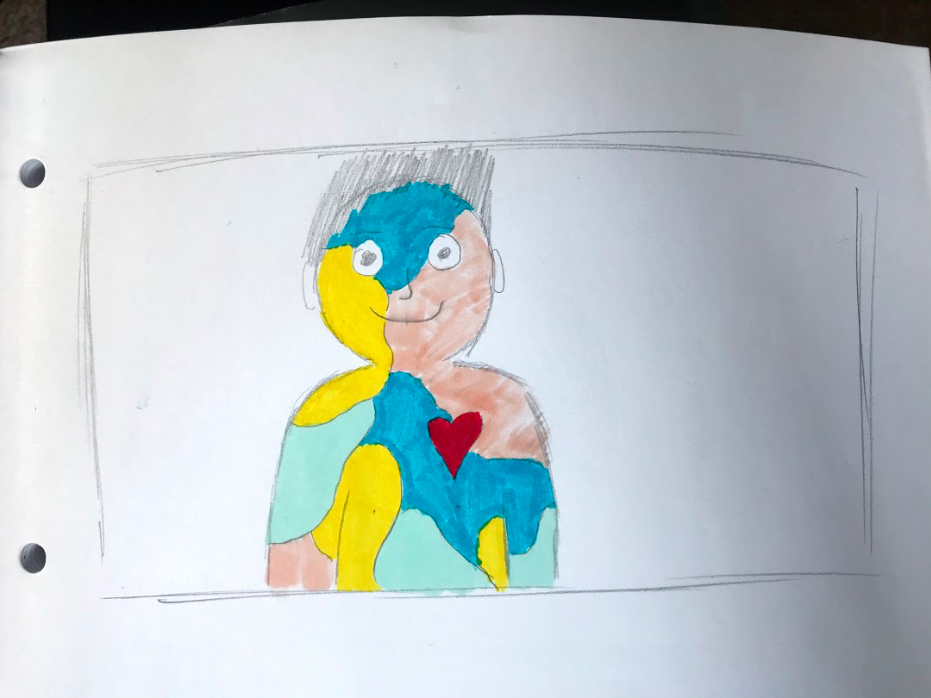
The idea initially goes off the back of following what the anatomy of a human is and how different personality traits and quirks make us who we are as individuals. In other words, I want to show the difference in how peoples brains are wired and mapped out to one another which I feel correlates to the map side of Maps & Networking. The way I see my idea being displayed would be in a short film format. I'd like a plain white background with just my subjects in centre frame, only one in frame at one time. The subjects would be topless and would be painted in different ways to show the diversity in how their mindset is. For example, my first subject would have a lot of yellow painted on them as yellow is stereotypically used to portray the feeling of happiness, showing that the first subject has a very positive outlook. As well as the yellow paint, I felt like I could use other bright, feel-good colours to fill in the rest of their body as well as painting a large love-shaped heart on the subject to emphasise how happy they are as well as caring.

I would continue to do this on the other subjects, painting them in contrast to their outlook and mindset. After showing 2 or 3 subjects who have a fairly level headed outlook I would then show a subject which would be painted in darker colours, predominantly shades of blue because opposed to yellow, blue can symbolise the feeling of misery or sadness. During this whole film I will have a voice narrating over the top explaining to the viewer what is going on and what the paint means and what the subjects are like as people. I feel like someone with a voice similar to either Stephan Fry or David Attenborough would suit the feel of the film very well. 


Maps & Networking - Artist Research, Yves Klein

Yves Klein was a French born artist who liked to use other people to model in his work; work including making sculptures of people close to him or even making paintings of multiple strangers. Klein became obsessed with using a certain darker shade of blue, so much so that it started to become internationally known as 'Klein Blue' or I.K.B. Klein used this newly found colour in almost all of his work; He used it with sponges in his famous monochrome paintings and even on nude models, covering them then making them lay on white paper on the walls and floor.


I found that Klein's work was very interesting, especially his use of colour and how he obsessed over it. The fact that he said that 'Klein Blue' "embodied nature" really inspired me when thinking about how interpreting colours can represent certain feelings or ideas. Having looked at his work, I have now begun to think more carefully about which colours I will be choosing to portray what emotions and thoughts on my own models. 


Sunday, 1 October 2017

Maps & Networking - Initial Idea


For this unit, my original idea was to go down the route of using an actual world map but instead of having the names of the countries, I wanted to have the names of things related to myself, essentially having a map of my human body. The map would correspond with the parts of me that stand out the most, for example, Russia, being the biggest country on the map would be my brain as it is the main control of my body. I would also have titles such as 'happiness' on a country. The idea would then progress onto going into that 'country' and see the memory that best represent that feeling. For example, in the happiness memory I planned to have myself watch over a family christmas from an earlier time in the same style as Ebaniezer Scrooge does in A Christmas Carol.


A video that also inspired me to think of this idea was one from creator Dan Howell. In this video, Howell makes "A Tour" of his brain, opening different doors and hatches which uncover the way in how he interoperates his thoughts and memories. I thought this was an incredibly creative idea and even thought about doing something similar on a much larger scale, even possibly making it an interactive instillation.